

Key Takeaways
Mortgage interest rate conditions set the mood for buyers: Freddie Mac’s weekly survey shows the average US 30‑year fixed mortgage rate was 6.01% on 19 Feb 2026 (down from 6.15% on 31 Dec 2025), which can increase the pool of buyers who need a loan.
Land stats often “swing” because there are fewer sales than homes; don’t price purely off one median price, use comparable sales, days on market, and buildability details.
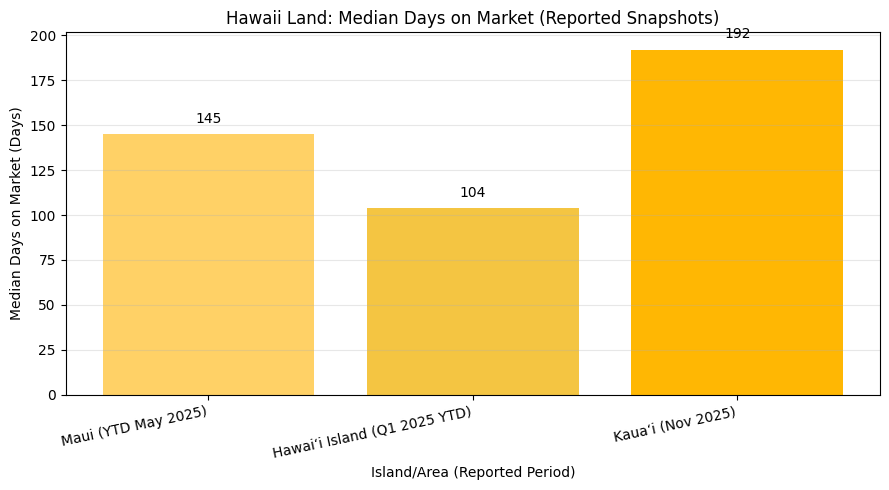
Recent local data signals show longer marketing times for land in key places (example snapshots: 145 median days for Maui YTD land; 192 days for Kaua‘i land in a monthly update).
Tourism continues to matter. In the calendar year 2025, visitors dipped slightly (‑0.6%), but visitor spending rose to $21.75B (+5.7%), supporting employment and local income flows that influence buyer confidence.
Rules and regulations affect net proceeds and closing speed: conveyance tax, HARPTA withholding for nonresident sellers, and FIRPTA withholding for foreign sellers can change how much you receive at closing and when.
How the Hawaii Land Market Works
The land market in the State of Hawaii is part of the broader real estate market, but it behaves differently from homes and condos because buyers must answer a harder question: “What can I legally and practically do with this property?” This is why land sellers who provide better information often get stronger results (fewer price reductions, fewer failed escrows) than sellers who provide only a basic listing description.
Sellable land commonly falls into these buckets (you may see different labels depending on the MLS/board):
Residential lots (buildable, sometimes subdivision lots).
Agriculture parcels (often marketed for farming, ranching, or “sustainable agriculture” use cases).
Commercial/industrial parcels (business use; often more permitting and infrastructure needs).
Special‑case parcels (larger master‑planned areas, conservation‑adjacent parcels, or land with significant restrictions).
A few “market trend” terms show up in almost every report:
Median price: the “middle” sale price when sales are sorted low‑to‑high. With land, where the number of sales is smaller, medians can jump around.
Days on market: how long listings typically take to sell. When days on market rises, it often signals buyers are taking longer to verify land‑use feasibility, financing, and costs.
Real estate appraisal: a professional opinion of value. For land, appraisers typically rely heavily on comparable land sales and adjust for access, utilities, buildability, and other differences. Also note that property tax assessments are mass appraisals for taxation and often warn that they are not intended for other purposes.
Market Drivers Shaping 2026 Demand and Pricing
Land demand is ultimately driven by Market (economics) conditions: borrowing costs, household confidence, employment, construction feasibility, and (in Hawaii) tourism strength and land constraints.
Interest rates, mortgages, and buyer behavior
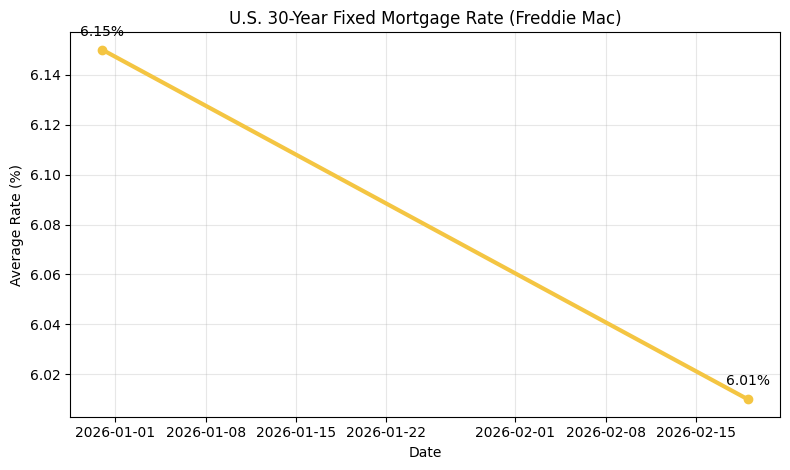
Even when an investor buyer pays cash, interest rates still influence the “feel” of the market because they affect the largest pool of buyers (those who need a mortgage or other financing). Freddie Mac reports the average US 30‑year fixed mortgage rate at 6.15% on 31 Dec 2025 and 6.01% on 19 Feb 2026.
For land sellers, this matters in two practical ways:
Some buyers become eligible again as rates fall, increasing enquiry volume (calls, showings, offers).
Land loans often have stricter underwriting and larger down‑payments than home loans, so the buyer pool is smaller, making your land’s “certainty” (permits, utilities, access) more valuable.
Tourism and second‑order demand for land

Tourism affects land indirectly: it supports jobs, wages and local spending, and it can make certain land types more desirable (visitor‑serving commercial sites, resort‑near parcels, and certain neighbourhoods).A key recent signal is that tourism spending strengthened even as arrivals softened. According to the Department of Business, Economic Development and Tourism, calendar‑year 2025 had 9,642,991 visitors (‑0.6% vs 2024) but $21.75B in visitor spending (+5.7%).Island highlights in that same source show continued scale (calendar‑year 2025):
O‘ahu: $9.42B total visitor spending.
Maui: $5.97B total visitor spending (and the report explicitly references the Aug 2023 wildfires as context for Maui’s recovery).
If you’re selling land near resort corridors (for example, around Kāʻanapali), tourism conditions can influence how buyers think about future use, neighbourhood momentum, and local rental/visitor‑employed demand, without this being an “Investment” recommendation.
Sustainability, water, and risk perceptions
Buyers in 2026 show more climate‑aware consumer behaviour, especially for parcels that depend on water availability, defensible space, and insurance feasibility. On Hawaiʻi Island, a University of Hawai‘i‑affiliated freshwater factsheet highlights wildfire‑risk considerations and water system issues, underscoring why “boring” details (water source, storage, access for fire response) influence land value discussions.For land marketed for sustainability or farming, sellers who can document irrigation access, soil suitability, and existing agricultural improvements tend to reduce buyer uncertainty, often translating into firmer pricing negotiations.
What the Latest Data Says About Land Across the Islands
Land reporting in Hawaii is fragmented: some boards publish home/condo statistics prominently, while land appears in separate reports or local board snapshots. The most seller‑useful approach is to treat recent numbers as signals, then price your parcel based on close comparables and its specific feasibility profile.
Maui County snapshot
In a Maui land report (May 2025 year‑to‑date), land activity cooled sharply:
62 vacant‑land sales YTD (down 35% from 95).
Total dollar volume down 53%.
Median land price $875,000 (down 14%).
Median days on market for land 145 days.
For sellers in Maui County, this kind of pattern usually means:
Buyers are more selective and take longer to verify buildability (septic options, water, slope).
High‑end or unique parcels may still sell well, but marketing time and documentation quality matter more.
Practical note: land around Upcountry and areas influenced by Haleakalā often requires buyers to think hard about slope, access, and water, so a strong seller information pack matters even more.
Hawaiʻi Island snapshot
A Big Island quarterly land report (1st quarter 2025, YTD vs prior year) shows a different profile, higher volume and very wide pricing:
Vacant‑land sales: 457 YTD (down 8%).
Median land price: $42,000 (down 7%).
Total dollar volume: $92.1M (up 9%).
Median days on market: 104 days.
The “higher dollar volume but lower deal count” pattern is a classic sign that the mix of land sold changed (for example, fewer small lots but enough higher‑priced land to keep dollar volume strong). This is exactly why sellers should not rely on only one headline median.
Kaua‘i snapshot
A local board snapshot (November 2025) shows:
Land median sales price: $837,500.
Days on market: 192.
Active land listings: 104.
Sold land listings: 8 (vs 11 the prior year in the same month snapshot).
For sellers on Kauaʻi, long marketing time is a strong hint that buyers need time to evaluate feasibility (access, utilities, permitting time), so “pre‑answering” questions in the listing package is especially valuable.
O‘ahu context for land sellers
Public O‘ahu reporting is often home/condo‑centred, but it still matters for land sellers because it shapes expectations about affordability, construction trade demand, and replacement costs.
A January 2026 report from the Honolulu Board of REALTORS® shows:
Single‑family home median sale price: $1,122,500 (with 194 sales).
Condo median sale price: $529,000 (with 297 sales).
On Oʻahu, land supply tends to be structurally constrained (built‑out urban areas and complex redevelopment pathways), so land buyers often compare “buy land + build” versus “buy existing”, making general house price levels part of their mental maths.
Land Development in Hawaii
Land development in Hawaii is shaped by limited buildable land, strict land-use rules, and island-specific infrastructure constraints, so a comprehensive feasibility review is essential. A realistic forecast for costs and timelines, especially heading into 2026, should account for zoning, access, water, wastewater, power, and site conditions like slope and drainage, since these factors affect long-term value and buyer confidence.
Many buyers compare “land + residential construction” against move-in-ready homes, while others focus on parcels suited for commercial properties near employment or visitor corridors. Using innovative technology like drone mapping, GIS overlays, and digital due diligence folders can reduce uncertainty, speed decision-making, and help your project plan yield clearer outcomes.
Hawaiian Property Market Value
Hawaiian property market value is shaped by what buyers can realistically do with a parcel and how easy it is to verify the facts behind the listing. A lender will usually scrutinize raw land more closely than a home, so access, utilities, and buildability can matter as much as location.
Limited inventory in certain areas can support pricing, especially for scarce segments like oceanfront parcels, but constraints and permitting timelines still influence offers. Value also shifts based on intended use, whether a buyer is planning a primary build, a long-term rental, or a future resale, and Hawaii’s diverse ecosystems can affect feasibility through slope, water, conservation rules, and hazard considerations.
Regulation, Zoning, and Seller Net Proceeds
Land is not just about location; it’s about legal use and adherence to regulation. Being able to explain this clearly is a major seller advantage.
Land use and zoning basics
Hawaii has a two‑layer system:
State land use districts.
County zoning inside those districts.
Why this matters: Two parcels that “look similar” on a map can have very different legal uses and permitting complexity depending on their land use district and zoning. If you’re selling agricultural‑zoned land, buyers will often ask what agricultural activity is feasible, what structures are allowed, and whether the parcel has any special overlays or restrictions.
Conveyance tax and withholding rules
These items affect your timeline and net proceeds, especially if you live out of state or are not a US tax resident.
Conveyance tax: Hawaii imposes a conveyance tax on transfers of real property interests (a state tax triggered by conveyance/transfer).
HARPTA: Hawaii explains HARPTA as withholding related to dispositions by nonresident persons, with official forms and guidance published by the Hawaii Department of Taxation.
FIRPTA: The Internal Revenue Service explains that the transferee must generally withhold 15% of the amount realized on dispositions by foreign persons (with key definitions and exceptions).
Seller‑practical implication: if any of these apply, they can change how much cash you receive at closing and may require paperwork well before closing. It’s not unusual for deals to drag if the parties wait until the last week to address withholding and exemption documents.
In a Hawaiian transaction, these costs and withholdings can meaningfully decrease what you net, which is why sellers should model their proceeds against realistic market value expectations for properties in Hawaii. This matters even more when higher interest rates make buyers sensitive to total deal costs, and when a buyer’s land acquisition timeline depends on clean documentation.
Also, remember that the county property tax rate and assessed values may come up in negotiations, but they are separate from conveyance and withholding rules, so clarify early how each item will impact your closing statement.
The 2026 Seller Insights Playbook
This section is intentionally detailed and actionable, but it avoids “Investment” recommendations. It is about how to sell land more effectively.
Build a buyer‑ready information pack
Land deals fall apart when buyers discover constraints late. A buyer‑ready pack typically includes:
Parcel identifiers (TMK), basic ownership facts, and any HOA/association rules if applicable.
Access documentation (recorded easements; whether roads are public/private).
Utilities status (power, water, and any internet servicing notes).
A plain‑English zoning and land use summary (what’s allowed, what is uncertain).
This is also where sellers can support or protect pricing: if you can document a water meter, grading, or prior approvals, you reduce the uncertainty that buyers usually “price in” as a discount.
Pricing strategy without guesswork
Good pricing is not “what someone hopes it’s worth.” It is:
Comparable land sales (size, zoning, location, access), adjusted for differences
A realistic view of days on market for land in your area (land often takes longer)
If you need help defending a price, a land‑experienced professional can explain how a real estate appraisal thinks about land value, and can help you avoid over‑relying on tax assessed values that may be designed for taxation rather than marketing.
Marketing that actually sells land
Land marketing must substitute for what a building would normally explain.Good land listings usually include:
Clear maps, boundary markers (or survey), and road/access visuals
Photos that show slope and usability (drone photos are often worth it).
A short “build/use story” based on zoning (for example: what a typical buyer could do, what permits are commonly needed).
A clear way to follow up (phone + email) while also respecting internet privacy (don’t publish sensitive personal details; handle inquiry info responsibly).
If you hire a real estate agent, consider a professional who sells land frequently. Land contracts, feasibility contingencies, and buyer objections are different from homes; experience tends to reduce closing risk.
Negotiating offers and avoiding failed escrows
Land offers often include longer feasibility periods because buyers need time for:
Surveys and boundary verification
Septic/percolation and wastewater plans
Utility feasibility
Contractor estimates
Sellers who keep their information organized and respond quickly often reduce buyer anxiety, which can improve outcomes even when the offer price is the same.
Seller planning for timing
Land is more exposed to headline risk: interest rates, recession headlines, and shifts in sentiment can freeze buyers temporarily. You can’t control those macro factors, but you can control readiness:
Have documents ready before listing
Price based on evidence, not rumours
Expect land to take longer than homes in many submarkets (recent snapshots show triple‑digit days on market in several places)