

Short Answer: For most traditional land sales in the United States, the average time to sell land can range anywhere from 3 to 24 months. Some properties sell sooner, some much later.
If you are wondering how long it takes to sell land, you are not alone. Many property owners expect the process to feel similar to selling a house, only to discover that land typically takes longer.
In fact, selling land can take months or even years on the traditional market, depending on location, demand, and the type of land you are working with.
This guide breaks down the time factors to consider, why land often takes longer to sell, and what you can do to make selling property faster and easier. Whether you are selling vacant land, rural land, raw land, or a small piece of land closer to town, the time it takes to sell land can vary significantly.
Below you will find a clear explanation of how long it takes, why it may take longer than selling a house, and the smartest ways to shorten the timeline.
How Long Does It Take to Sell Land?
For most traditional land sales in the United States, the average time to sell land can range anywhere from 3 to 24 months. Some properties sell sooner, some much later.
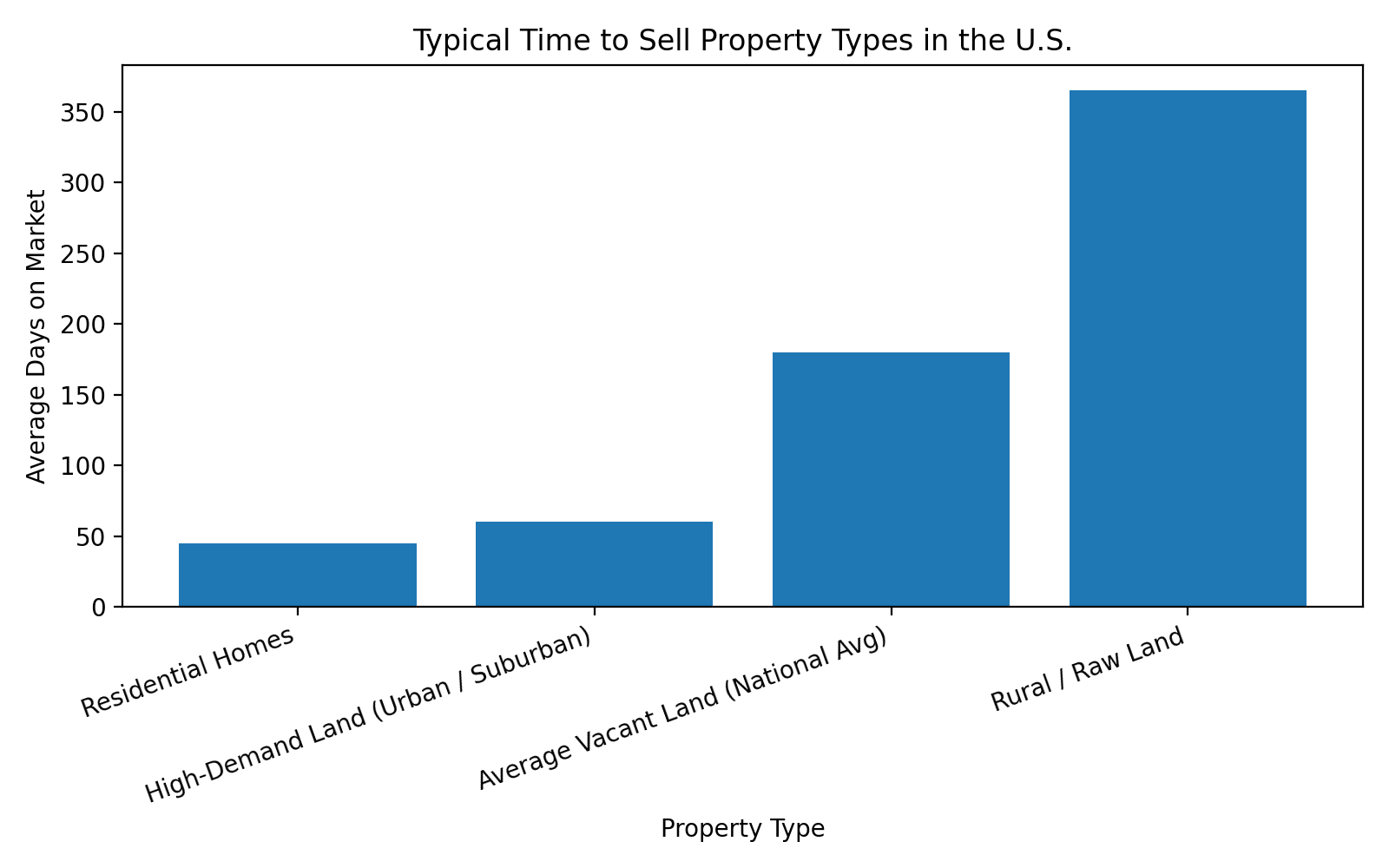
The truth is simple: selling land generally takes longer because the buyer pool is smaller and more selective. A buyer who is purchasing land is usually thinking about the long term, whether it is building, farming, investing, or holding the property until land values increase.
If you are wondering how long it takes because you need a quick sale or want predictable timing, this guide will help you understand what affects the timeline and how to sell land fast when needed.
Why Does Selling Land Take Longer Than Selling a House?
Compared to selling a house, the time it takes to sell land is very different. House sales are driven by lifestyle needs, financing, and a large market of ready homebuyers. Land involves more uncertainty for the buyer, which slows everything down.
Here are the main reasons land take longer on the traditional market:
- The market for vacant land is smaller than the homebuyer market.
- Many potential buyers need time to research zoning, utilities, access, and development costs.
- Land appeals to niche groups, such as land investors or recreational land seekers.
- Financing land purchases is harder, which reduces the number of qualified buyers.
- Many land parcels sit in rural areas where demand is naturally low.
Because land involves more unknowns, purchasing land requires more due diligence. This extra work means the selling process is slower and requires patience from the seller.
What Makes Selling Land Take Longer?
Several factors determine how long it takes to close a deal. Some are in your control; others are tied to the land market and broader real estate market.
Below are the most common variables that influence the time it takes to close a deal.
1. Location and demand
Location is the number one factor that affects how long it takes. A property may sit for months if the area has few buyers for vacant land or if the land is far from cities, major roads, or services.
Factors such as location and access are critical in every land sale. For example:
- If the land is close to expanding development, it may sell quickly.
- If the land is far from amenities, sales in your area may be slow.
- If the property is landlocked or hard to reach, it may take longer to sell.
2. Type of land and zoning
The type of land is also a major factor.
Residential parcels often sell faster than commercial tracts because more buyers are available. Agricultural land, recreational land, or raw land may take longer since each appeals to a smaller group of potential buyers.
Zoning is another influence. A zone that limits what a buyer can build may reduce demand. On the other hand, flexible zoning can make selling easier.
3. Pricing and land values
Pricing can significantly speed up or slow down the land selling process. If you price the property too high, it may sit untouched while potential buyers move on to more reasonable listings.
Knowing the land market and comparable land sales in your area helps you price competitively. Land values also shift with market for land trends, so your pricing must match current conditions.
4. Property characteristics
Certain features can improve demand, while others may hold the listing back.
Buyers for vacant land pay attention to:
- Road access
- Utility availability
- Water sources
- Soil quality
- Flood zones
- Environmental restrictions
- Topography
If the property may require expensive improvements before development, the land buyer might hesitate or negotiate heavily.
5. How you market your land
Many land listings get little attention because owners do not market their land effectively. You need professional photos, accurate details, parcel boundaries, and clear descriptions to reach the right buyer.
See this guide on how to sell your land effectively if you want tips on how to market your land.
6. Whether you use a real estate agent
Hiring a real estate agent can help, but not all agents specialize in vacant land. Some estate agents focus on home listings and may not understand how to position a land for sale or how to find the right buyer.
A land specialist can improve visibility, but agents also charge commissions and cannot guarantee a timely sale.
7. Market conditions
The broader real estate market also matters. In a slow economy or declining market for land, selling land can take more time. Even properties in good locations can experience this if financing is tight or if buyers feel uncertain about the future.
Comparing Selling Land vs Selling a House
Selling a house usually takes less time because the buyer pool is larger and financing is more accessible. Houses come with built-in value that buyers can see immediately, like structure, livable space, and modern features.
By contrast, land involves unknowns:
- How much will development cost?
- Will zoning allow the intended use?
- Will the land meet the buyer's goals?
Because of these questions, land involves more due diligence. That is why it often takes longer than selling houses or even commercial buildings.
How Long It Takes to Sell Land on Average
Here is a rough estimate of traditional timeframes:
- Hot markets: 1 to 3 months
- Balanced markets: 3 to 9 months
- Slow markets or rural land: 9 to 24 months or more
Keep in mind that selling land can take significantly longer if the property has limited access, complicated zoning, unclear boundaries, or no utilities.
Why Buyers for Vacant Land Move Slowly
Vacant land attracts a smaller audience. Most people want move-in ready houses, not land that requires planning, permits, and money to develop. This means you often wait longer to find the right buyer.
Potential buyers generally need time to:
- Visit the land
- Review property lines and maps
- Check flood zones
- Estimate development costs
- Verify zoning
- Compare competing listings
Because of this extended research, land transactions rarely close quickly.
Time Factors to Consider if You're Selling Land
Here are key variables that impact the time to sell your land:
- The buyer pool size
- Local sales history
- Zoning and restrictions
- Land condition and improvements
- Price competitiveness
- How well you market your land
- Land investments or investor interest
- Regional demand for land across your state
If you want to avoid surprises and make selling easier, you must understand that land involves more complications than home sales.
How Long Does It Take to Sell My Property With a Cash Buyer?
Selling to a cash buyer is the fastest way to sell a lot. Instead of waiting months, you can get a cash offer in days and close on your land in as little as 1 to 2 weeks.
Cash land buyers eliminate many steps that slow down traditional listings:
- No bank financing
- No repairs
- No realtor fees
- No showings or negotiations with multiple buyers
- No long marketing period
Cash buyers are ideal when you want a quick sale or want to avoid the long waiting period.
What Affects the Selling Process Timeline?
When it comes to buying or selling land, several issues shape the timeline:
- Title problems
- Survey issues
- Missing documents
- Disputes over property boundaries
- Environmental concerns
- Delays from a real estate attorney
- Challenges in obtaining a purchase agreement
Even if the right buyer appears, paperwork can delay closing.
When a Property May Take More Time to Sell
A property may take more time to sell if:
- It is far from development
- The land does not have access to utilities
- The land is steep, rocky, or difficult to build on
- The area has few recent land sales
- The buyer pool is extremely small
- The price is not aligned with the land market
If your land meets one or more of these conditions, a traditional sale could take a long time.
Common Mistakes That Slow Down Land Sales
Sellers often make errors that extend the selling timeline. These include:
- Pricing too high
- Poor listing photos
- Incomplete property details
- Overlooking zoning restrictions
- Ignoring comparable sales
- Hiring the wrong agent
This helpful guide on mistakes to avoid when selling land provides more information on these pitfalls.
How to Sell a Piece of Land Faster
If you need to sell fast, there are several ways to improve your chances.
Price realistically
Pricing is one of the strongest levers you can pull to sell quickly. If the listing is priced too high, you will wait months for someone to negotiate.
Improve your listing
- Use clear photos
- Add property boundaries
- Include zoning details
- Describe unique selling points
Buyers want certainty, and more information helps.
Market to the right audience
Make sure your listing reaches people who are actually purchasing land. Recreational buyers, investors, and builders all look for different features.
Work with land experts
Not all real estate professionals understand land. Someone experienced in land transactions can help expedite the process.
Sell to a cash buyer
If you want the fastest option, selling to a land investor or cash land buyer gives you the most predictable timeline. These buyers purchase land as is, pay cash, and close quickly.
Selling Land in Remote Areas
If your land is located in a rural region, it may take more time to sell on the open market. Demand is lower, utilities may be limited, and potential buyers may be rare.
To learn how to market remote property, see this guide on selling land in remote areas.
Can You Speed Up the Time It Takes to Sell Land?
Yes. If you want to shorten the time it takes to sell your property, you need to focus on two things: pricing and access to ready buyers.
You can also:
- Improve your listing quality
- Provide detailed information upfront
- Make map and survey documents available
- Clear up title issues early
- Offer seller financing to expand your buyer pool
Seller financing can widen your buyer pool, but it also lengthens the time you receive full payment and involves a land contract, so it is not for everyone.
The Fastest Way to Sell Land in Any Condition
If you want predictability and a quick sale, a cash offer is the fastest path. Companies like Sell Land Cash buy land quickly without the complications of traditional listings. They handle closing costs, paperwork, and title issues so the seller does not have to wait months for the right buyer.
This option is ideal if you want a timely sale and do not want to wait for potential buyers to decide.
Final Thoughts
Selling land can vary widely in terms of timing. The time it takes depends on demand, pricing, marketing, land characteristics, and local conditions. In many cases, land typically takes much longer to sell than houses, especially when it is rural, undeveloped, or niche.
If you want to reduce the wait, take steps to market your land effectively, price it competitively, and understand the demands of the buyer pool. And if you need a predictable and quick sale, consider selling directly to a cash buyer who can help expedite the process.
No matter where your land is located or why you are selling, understanding the process gives you better control and helps you sell faster.